
Why Neurodivergent Women Miss Burnout Clues
Most late-diagnosed neurodivergent women do not miss burnout clues because we are careless or bad at taking care of ourselves.
We miss them because we were taught not to trust them.
For years, many of us learned to keep going past tired, past hungry, past overwhelmed, past overstimulated, past irritated, and past done. By the time we finally notice something is wrong, burnout is usually not beginning. It has already been building for a while.
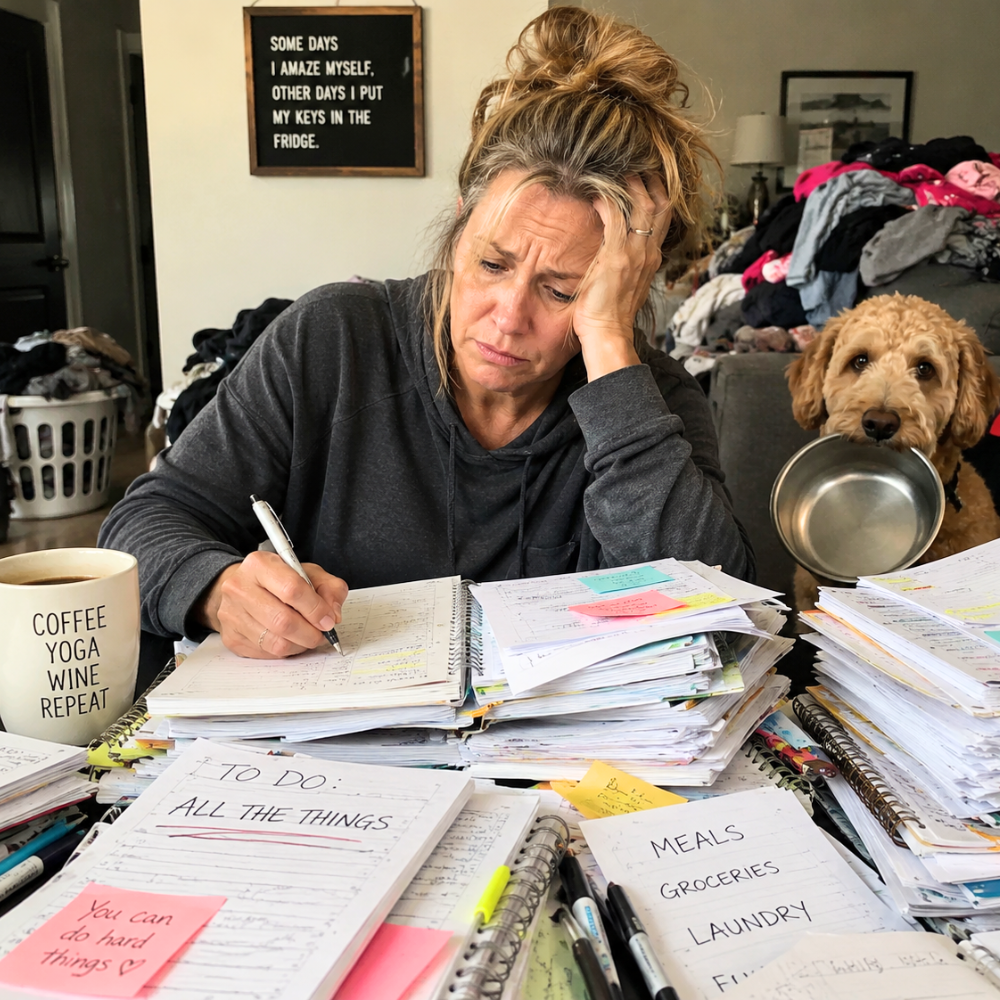
Burnout Does Not Always Look Like Collapse At First
A lot of us picture burnout as the moment we cannot get out of bed, answer messages, make food, care about work, or function like our usual self.
That does happen, but it is often the later stage.
The earlier clues are easier to miss because they look like normal life, a bad mood, a busy week, poor discipline, or being “too sensitive” again.
The First Clue Might Be Irritation
Irritation is one of the clues many women dismiss first.
We snap at the dog, resent the text message, get annoyed by a perfectly normal question, or feel like one more sound in the room might send us over the edge.
Instead of seeing irritation as information, we often turn it into a character problem. We tell ourselves we are being rude, impatient, dramatic, or difficult, when our system might be telling us we are running out of room.
The Clue Might Be Urgency
Urgency can feel like energy, which makes it tricky.
We suddenly clean the kitchen, answer ten emails, make three appointments, start a new plan, and tell ourselves we are finally getting it together.
Sometimes that is real energy, but sometimes it is stress wearing running shoes.
A useful question is, “Am I doing this because I have the energy, or because I feel like I have to?”
The Clue Might Be Brain Fog
Brain fog is not always random.
It can show up when we have been pushing too long, ignoring hunger, carrying too many decisions, masking through too much social contact, or trying to make ourselves focus when our brain has already hit its limit.
We might reread the same sentence, lose our words, forget what we were doing, or stare at the task while feeling like the door in our brain will not open.
The Clue Might Be Avoiding Simple Things
Before burnout becomes obvious, simple things often start feeling strangely heavy.
A shower feels like twelve steps. A text feels like homework. Making lunch feels like a whole event. Leaving the house feels like too many decisions before we have even found our shoes.
This is where many of us blame ourselves, but avoidance can be a clue that the demand is bigger than our current capacity.
The Clue Might Be Resentment
Resentment often shows up when we have said yes too many times without checking capacity.
We might still do the thing, show up, help out, reply, listen, plan, or take care of everyone else, but inside there is a quiet edge building.
That edge is worth listening to before it becomes a crash, a fight, or another week of feeling like everyone gets access to us except us.
The Clue Might Be Sensory Overload
Burnout can make ordinary sensory input feel harder to handle.
Lights feel harsher, sounds feel louder, clothes feel irritating, the grocery store feels impossible, or being around other people feels like too much.
When our capacity drops, our sensory world often gets louder.
The Clue Might Be Losing Recovery Time
Another early clue is needing longer to recover from things that used to feel manageable.
One errand takes the whole afternoon. One conversation wipes us out. One busy day turns into three days of fog. A normal week starts needing a recovery plan we do not have.
That does not mean we are failing. It means the cost of life has gone up.
The Clue Might Be Not Knowing What We Need
When burnout gets close, our needs often stop feeling clear.
We do not know if we need food, quiet, movement, sleep, space, support, or to stare at a wall for twenty minutes before making another decision.
This is why “listen to your body” can feel useless for late-diagnosed women. Sometimes the body is speaking, but the signal has been buried under years of pushing through.
Why We Miss The Clues
We miss burnout clues because we learned to explain them away.
We learned to call irritation a bad attitude, fog a focus problem, exhaustion laziness, avoidance procrastination, and resentment selfishness.
After years of doing that, the clue arrives and we put it on trial instead of taking it seriously.
How Neurodivergent Yoga Helps
Neurodivergent Yoga starts with noticing because we cannot respond to clues we never learn to recognize.
We use movement, breath, rest, attention, self-study, and real-life check-ins to begin noticing what happens before we crash.
The work is not to catch every clue perfectly.
The work is to become curious sooner.
A Simple Burnout Clue Check-In
A burnout clue check-in can be very small.
You might pause and ask what has changed.
Am I more irritated than usual?
Do simple things feel heavier?
Am I running on urgency instead of energy?
Am I losing words, focus, or patience?
Do I need more recovery time than usual?
Have I been saying yes without checking-in with my energy capacity?
The answers do not have to be perfect. We are not trying to solve our whole life in one check-in.
We are gathering clues.
Self-Trust Starts Coming Back Here
Every time we notice a clue and take it seriously, we build a little more trust with ourselves.
Maybe we eat before we get shaky. Maybe we leave before we hit the wall. Maybe we rest before our body makes the decision for us. Maybe we say no before resentment takes over.
Those choices might look small from the outside, but they matter.
They tell us, “I am listening.”
And for many late-diagnosed neurodivergent women, that is where self-trust starts coming back.